The color purple signifies royalty and grandeur, it brings together the calm stability of blue and the fierceness of red. Purple can be a tricky color to play with. The best part is the purple color has a long list of beautiful flowers to choose from.
25 beautiful and attractive purple flowers
1. Lavender
They are known for their fragrances and also for a variety of remedies like bug bites. In colder areas, planting them in spring or summer seasons works best and in warmer areas planting them in early fall works best.
They usually grow to 1-3 feet tall and are bushy in nature. It grows best on moderately fertile soils. Care should be taken so as to not overwater them, especially after their early days. Fertilizers should also be in minimum quantity.

2. Bellflower
They usually exist in shades of purple and white. They have long leaves with tapering edges. The plant grows to about 2-6’ long depending on the moisture and fertility of the soil.
They enjoy the full sun and well-drained loamy soil. They bloom from June till frost and form an excellent ground cover. They are cold hardy plants that can survive extreme weather and drought-like conditions, once established.

3. Alliums
These bulb-shaped perennials are a family of onions and garlic. They are usually 2’’-4’’ in diameter. They are very culturally undemanding and grow on any kind of soil as long as there’s enough sun to bathe in.
They need to be planted in the fall and that is all because they are very bee-friendly and hence multiply naturally.

4. Purple rose flower
This rose has the normal dimensions of a regular rose and grows well in well-drained soil. They require a lot of sun and need to be infrequently well irrigated.
Mixing organic matter and compost into the pit before planting is key. An added tip is that they need regular pruning.

5. The Jacaranda tree
They tolerate pretty much any kind of well-drained soil preferably slightly sandy ones, as they don’t grow well in watery places like over a pool.
They are mostly grown in warmer climates. Water the tree weekly for the first few weeks. They are large trees that can grow up to 50 feet.

6. The Fuchsia flower
The plant produces extravagant flowers, is bush-like and the plant can grow up to 6 feet tall. The best part is they are perennials.
They require moist soil and need partial sun. If exposed to direct sunlight, the plant can die. They shouldn’t be overwatered as well.

7. Clemantis
They are hardy vines with beautiful purple flowers that can grow up to 5-6’. These perennials are also called leather flowers; many cultivators are coming up with hybrids of the flower.
They grow in well-drained soil and need good sunlight. The soil can vary in alkalinity; even slight acidic soils work well.

8. Purple Diasy
They are abundantly found and can be grown anywhere on earth. They grow up to 4 feet tall and have medicinal properties. They are used to make medicinal tea for coughs and disorders of the kidney and liver.
They are cold hardy plants that grow in moist conditions. They are usually sown in early winter. They do well in full sun and can be grown in partial shade as well. They work well in average to sandy soils.

9. Balloon Flower
The plant usually grows two feet tall and grows in clusters hence densely filling the garden. They are non-invasive and safe to grow on flower beds even though they’re dense.
Their soil preference is well-drained loamy soil and requires full sun. They can re-bloom once the old flowers are cut.

10. Sweet Rocket
They self-seed to grow again. The pleasant fragrance is what makes the flower stand out. They are easy to grow and require composting in the early stages.
They grow in full sun and grow well in part shade as well. Its leaves have medicinal applications and are edible. They can grow up to three feet tall.

11. Catmint
Catmint is an aromatic flower. They are nectar-rich plants that grow in summer and will grow back another flush if the first flush is cut on time.
They grow in bushes for about 12 -36 inches depending on its types. Where the weather is extremely hot and dry it can take afternoon shade otherwise it grows in full sun.
They don’t require rich soil but need to be well-draining. They are used for stress relief and digestive issues. They can be used to ease menstrual cramps as well.

12. Japanese Iris
They are the most elegant of the iris species. These grow well in moist soil and standing water. They grow well with enough water. They grow to about 2-3 feet.
The plant food should be nitrogen-rich and that fertilization should be limited once the root system is well established.

13. Wisteria
They bloom in spring. They are fast-growing vines that grow 25-30 feet long within weeks. They flower well in fertile and moist soils that drain well too. They need full sun and don’t blossom fully if the sun is partial.

14. Lilac
They are flowering plants from the olive family. They grow from 5-15 feet tall depending on their varieties. They are easy to grow and low-maintenance plants.
They grow in fertile, well-draining and humus-rich soil. To bloom well they need full sun for at least 6 hours. Care must be taken so as to not overwater the plants as they don’t prefer wet soil.

15. Hydrangea
These nostalgic flowers have shrubs like growth and grow 5-10 flowers. They grow up to 1-3 feet tall. The flowers require full sun. The soil can be slightly acidic to neutral; slightly alkaline soils work just fine too.
The soil type must be rich, moist and porous. Additional care must be taken to keep the soil moist but not wet or it won’t bloom well.

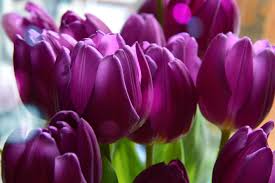
16. Tulip
This flower comes in a variety of colors apart from purple. They grow in full sun to part sun. The soil must be more than well-draining.
They don’t prefer much heat. Care must be taken as to not water them more than required. They can grow up to 71 cm in length.
17. Cosmos
It can be referred to as a wildflower. They grow on dry and arid soils and can grow from 10-60cms tall. They grow from their seeds. Leaving the soil wet makes the plants prone to diseases.

18. Heliotrope
These bushy clusters of star-like flowers come in a variety of colors. They are mostly known for their fragrance and give an excellent aroma. They spread over their ground.
They grow to about 3-6 inches tall. They grow as annuals or perennials depending on the climate. They can also grow in part shade, but do not skip the sun. They grow on moist but well-drained soil.

19. Oriental Hellebore
They’re naturally tolerant and resistant to most conditions. These are poisonous as they aren’t edible, nevertheless, their aesthetic appeal doesn’t fail to impress. They are capable of growing up to 18 inches tall.
Besides that, they’re pest and deer-resistant. They bloom for a long period and are less maintenance. Their lifespan is for about 5 years. They grow in rich well-draining soil.

20. Coneflower
They are very bee-friendly with their conical seed structure, if left after the bloom they attract songbirds too. Due to their cone structure, they profusely regrow by reseeding.
They can grow up to 5 feet. They love full sun and grow in a well-drained loamy soil. They are drought resistant too.

21. Purple Orchids
They are originally tropical flowers and are therefore grown indoors. Their growth depends on different varieties from 12-18 inches.
These plants need to be re-potted to avoid root rot. Orchids are mostly epiphytic and need air around their roots that is why light and fast-draining soil must be used instead of standard soil.
While repotting, cut off any spoilt roots that have darkened or become spongy.

22. Foxgloves
They’re easy to grow as they reseed. These plants are biennial, that is they bloom once in two years. The soil needs to be well-draining. They grow up to 5 feet tall, with enough fertilizers they can grow taller.
They can grow in full sun, partial shade to full shade all depending on the heat. Afternoon shade is preferred in hotter regions. All parts of this plant are toxic. Although the nectar attracts birds.

23. Crocus Flowers
The crocus flowers are tiny with a height of not more than 6 inches. The crocus flowers can be planted before the ground freezes in a well-draining loamy soil.
They can be planted anywhere except in extremely shady areas. They bloom in early spring and signifies youthfulness. The crocus bulbs provide a great winter display as an added bonus.

24. Lupine
These conical spires of dense flowers are a treat for the vegetable garden as these legumes help the broccoli, squash and cucumber grow by improving soil quality.
They grow in full sun as flowering decreases in shaded areas. They require acidic, well-drained soil. They do not do well with waterlogging soil and conditions. The plant grows in shrub-like structures and can grow up to 12-48 inches.

25. Azalea Flowers
They aren’t fussy and attract birds. They like humidity and moist summers. They also love adequate rainfall. They require acidic, moist soils. Early plants require lots of sun; shrubs need 6 hours of sunlight at least.
Don’t expose them to cold, dry winds; they may die. If your azalea flowers aren’t blooming, it must be because of excess fertilizer as they don’t do good with excess nitrogen.
